
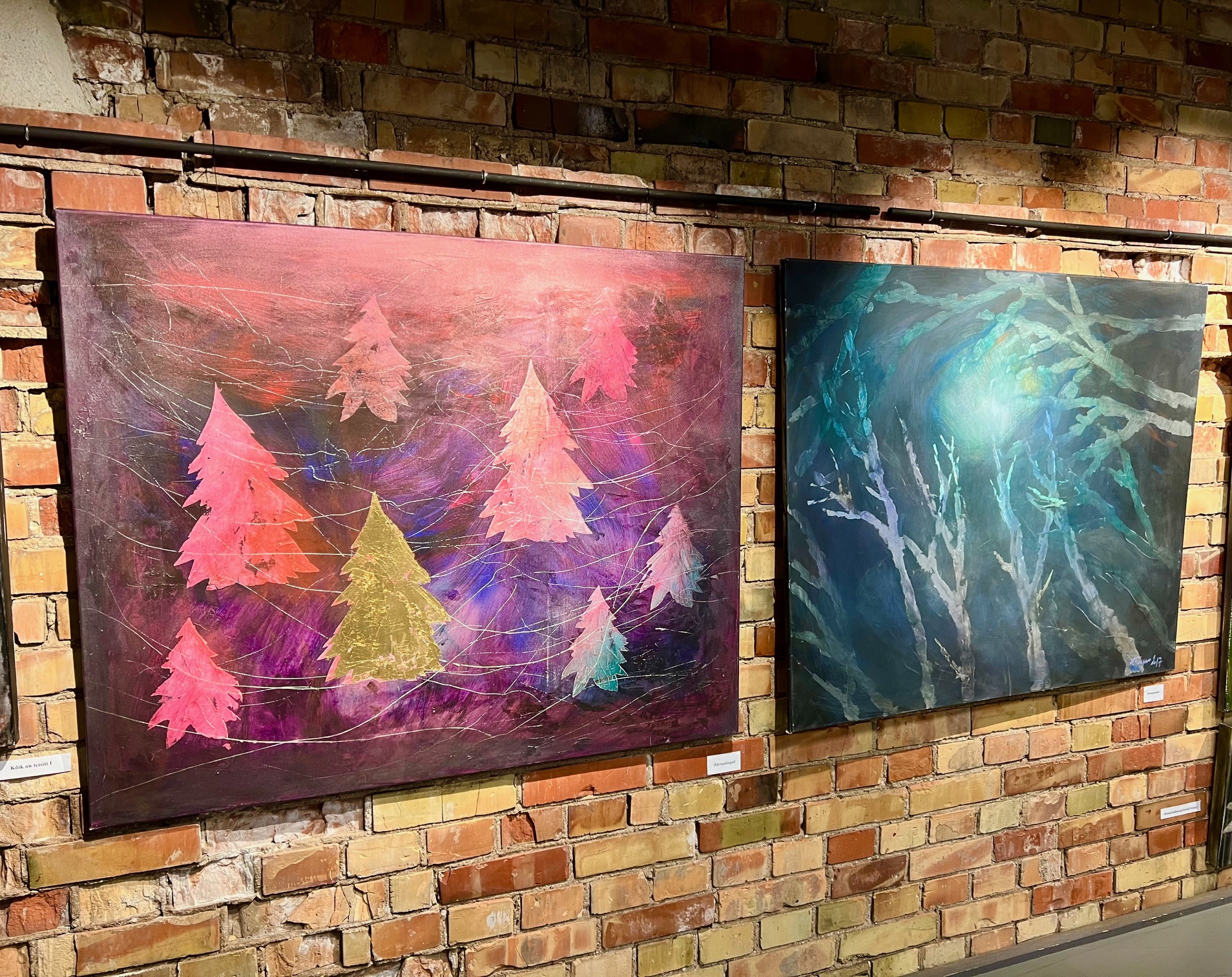
Wittenstein Activity museum opened a new exhibition introducing the work of artist and Pallas University of Applied Sciences professor Heli Tuksam, titled “Stumps, Shoots and Spruce Trees”, at the Wittenstein Activity Museum.
Heli Tuksam (born 1956) is an artist originally from Pärnu. She currently lives in Järvamaa, surrounded by nature, but works in Tartu at the Pallas University of Applied Sciences. This year marks her 35th year of teaching. In 1985, she graduated from ERKI (now the Estonian Academy of Arts) from the Department of Painting, specialising in monumental painting under the supervision of Dolores Hoffmann. In her earlier work, the artist created numerous glass objects and stained-glass pieces, but in recent years she has focused mainly on acrylic painting. Tuksam has participated in several international exhibitions and many group exhibitions in Estonia.
Tuksam’s main sources of inspiration are her immediate living environment and often also certain feelings or emotions. For the artist, the act of painting is a dialogue with what unfolds on the canvas. This exhibition brings together works that deal primarily with the theme of forests and trees — with nature and the anticipation of the holidays at their centre.
At the exhibition opening, Pallas will also present the publication “The Rosette and Its Transformation in Interior Decoration”. The book compiles research conducted by students over several academic years on historical buildings and the rosette as a central ceiling cornice element, reflecting Pallas’ long-term restoration activity within Estonia’s architectural heritage. The publication examines the rosette as an important decorative and symbolic motif — both ornamental and believed to bring good fortune. Rosettes play a significant role especially during the Classicist and Historicist periods, which are represented in the examples discussed in the book. The overview is based on the interiors of two manors (Kiltsi and Esna) and one noble residence (the von Knorring House in Tartu). The book introduces the history and spatial layout of these buildings, breaks down the structure of their rosettes, and provides a stylistic overview of how rosettes and their elements evolved, accompanied by comparative examples from other Estonian manors. The selected buildings represent intentionally different conservation approaches. The book concludes with a small glossary, illustrated with examples and drawings, serving as a helpful resource for students, practising conservators, and those interested in art and architectural history.
Heli Tuksam’s exhibition will remain open in Paide until March 2026. Visiting hours are Wed–Sun from 10:00 to 18:00; other times by prior arrangement.
Additional information:
Ründo Mülts
SA Ajakeskus Wittenstein / Järvamaa Museum
5668 2165